Introduction
In an era where over 68% of all measurable online journeys begin with a search engine query, appearing at the exact moment your target audience seeks your solution is no longer optional—it is the bedrock of modern commercial growth.
Many business owners initially rely on paid advertisements to fuel early customer acquisition. However, the moment paid ad spend ceases, lead inflow abruptly halts. Search Engine Optimization (SEO) represents the fundamental counterweight to this pay-to-play treadmill: an evergreen, compounding business asset that captures high-intent prospects around the clock without incurring continuous click charges.
In this comprehensive guide, we will unpack precisely how SEO helps businesses scale online, explore the four fundamental pillars of modern organic search, analyze real-world performance statistics, and outline an actionable roadmap to outrank entrenched competitors.
How does SEO help your business grow? SEO builds consistent, compounding visibility on major search engines like Google. By aligning your site's technical structure, authoritative content, and search intent with what customers are actively searching for, SEO drives pre-qualified traffic, establishes market trust, lowers overall customer acquisition costs (CAC), and generates scalable long-term revenue.
What Is SEO?
Search Engine Optimization (SEO) is the systematic methodology of enhancing a website's technical architecture, editorial relevance, and backlink authority to maximize its organic (non-paid) visibility on search engine results pages (SERPs).
Rather than treating search algorithms as a mysterious black box, effective SEO views search engines as sophisticated answer engines dedicated to delivering the fastest, most authoritative, and most comprehensive answer to a searcher's question.
A comprehensive search strategy operates across three interconnected pillars:
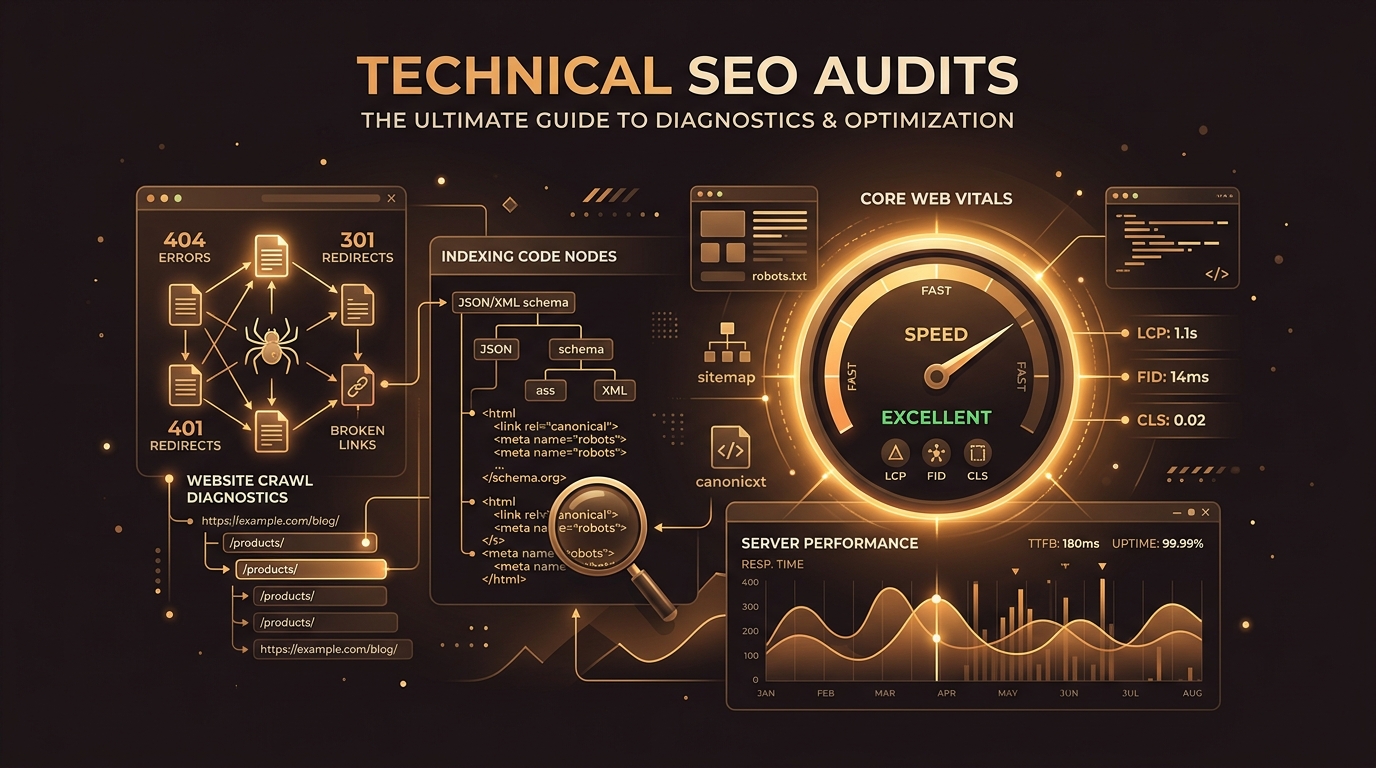
- Technical SEO: Ensuring search engine bots can discover, crawl, render, and index website pages effortlessly without encountering broken links, slow Core Web Vitals, or duplicate content blocks.
- On-Page SEO: Crafting intent-matched content, optimized meta tags, structured heading hierarchies (H1–H3), and internal linking pathways that directly resolve searcher questions.
- Off-Page SEO: Developing brand authority, digital PR mentions, and high-quality editorial backlinks from reputable third-party publications.
Why Is SEO Important for Business Growth?
Unlike outbound marketing channels such as cold emailing or display ads—which interrupt potential clients during their daily routines—organic search connects you with users who are actively searching for the exact solutions, products, or services you offer.
1. Compounding Organic Traffic That Never Sleeps
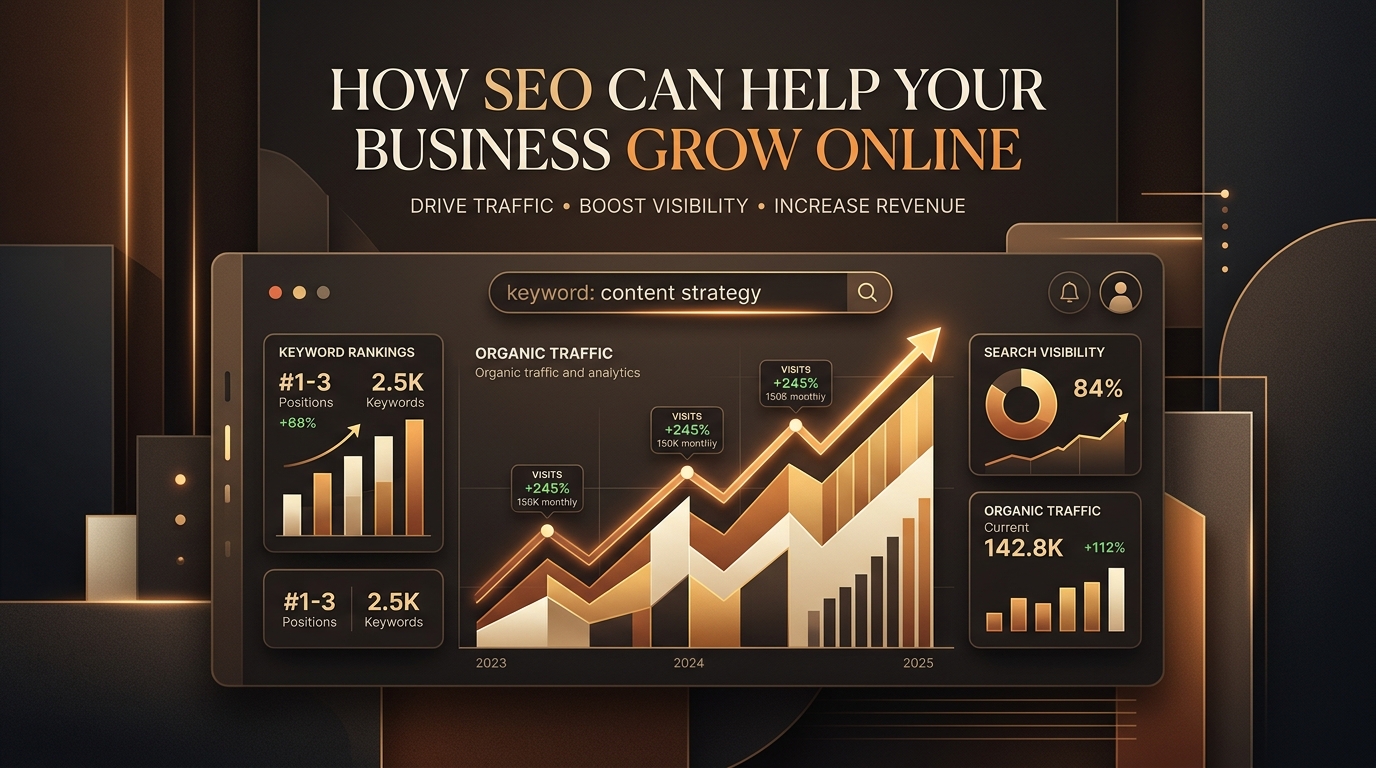
Traditional advertising channels demand continuous monetary injection. The moment you pause an ad campaign, your traffic evaporates to zero. In contrast, an optimized, authoritative article or service page published today will continue driving qualified leads in month six, year two, and year five. This compounding flywheel effect turns your digital presence into a durable capital asset.
2. Attracting High-Intent, Pre-Qualified Buyers
Not all website traffic is created equal. A user searching for generic information behaves very differently from someone searching for "technical SEO audit consultant Kerala" or "best digital marketing retainer for SaaS". By mapping your content architecture to bottom-of-funnel commercial keywords, SEO captures prospects at the exact moment of commercial consideration.
3. Maximizing Long-Term ROI and Slashing Customer Acquisition Cost (CAC)
While SEO requires upfront strategic investment, its effective cost per acquisition drops exponentially as page rankings solidify and keyword footprints widen. Over an 18-month horizon, organic search consistently achieves the lowest blended CAC of any digital marketing channel.
How Does SEO Work? (The 4-Step Process)
To make your website rank predictably, you must understand the sequential journey a search engine undergoes before displaying your page to a prospective client:
Crawling — Discovery via Search Bots
Search engine web crawlers (such as Googlebot) discover pages by following hyperlinks across the web and reading your XML sitemap. If your site blocks bots via robots.txt, produces 404 crawl errors, or buries pages under complex navigation, your content remains invisible.
Indexing — Storage and Meaning Categorization
Once discovered, Google analyzes your page's textual content, structured schema markup, images, and semantic tags. The parsed information is stored in Google's massive global index, categorized by topical relevance and intent.
Algorithmic Ranking — E-E-A-T and Search Intent
When a user enters a query, algorithms evaluate hundreds of ranking signals—including topical relevance, page load speed (Core Web Vitals), mobile responsiveness, and author trustworthiness (Experience, Expertise, Authoritativeness, and Trustworthiness)—to order results by usefulness.
Continuous Optimization — Data Feedback Loops
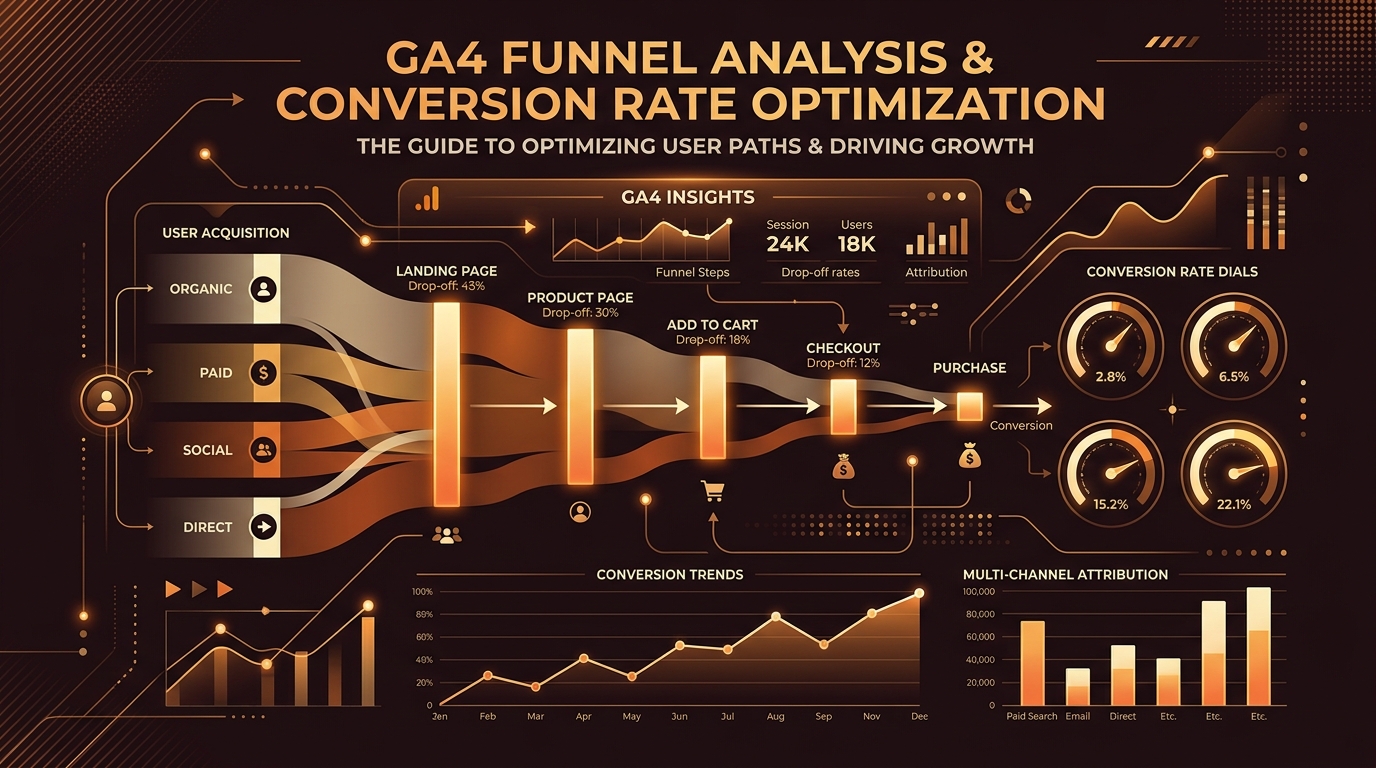
Search rankings are dynamic. By continuously reviewing performance in Google Search Console and Google Analytics 4, you refine underperforming titles, expand shallow content, and defend positions against emerging competitors.
Key SEO Strategies to Scale Your Business
Sustainable organic expansion requires executing proven, white-hat strategies tailored to searcher expectations:
1. Comprehensive Technical SEO Foundation
Before publishing new content, verify that search engines can navigate your site smoothly. This involves auditing canonical tags to eliminate duplicate content, implementing structured JSON-LD schemas, compressing images into modern WebP/SVG formats, and achieving sub-2.5-second Largest Contentful Paint (LCP) scores.
2. Search Intent Mapping & Keyword Research
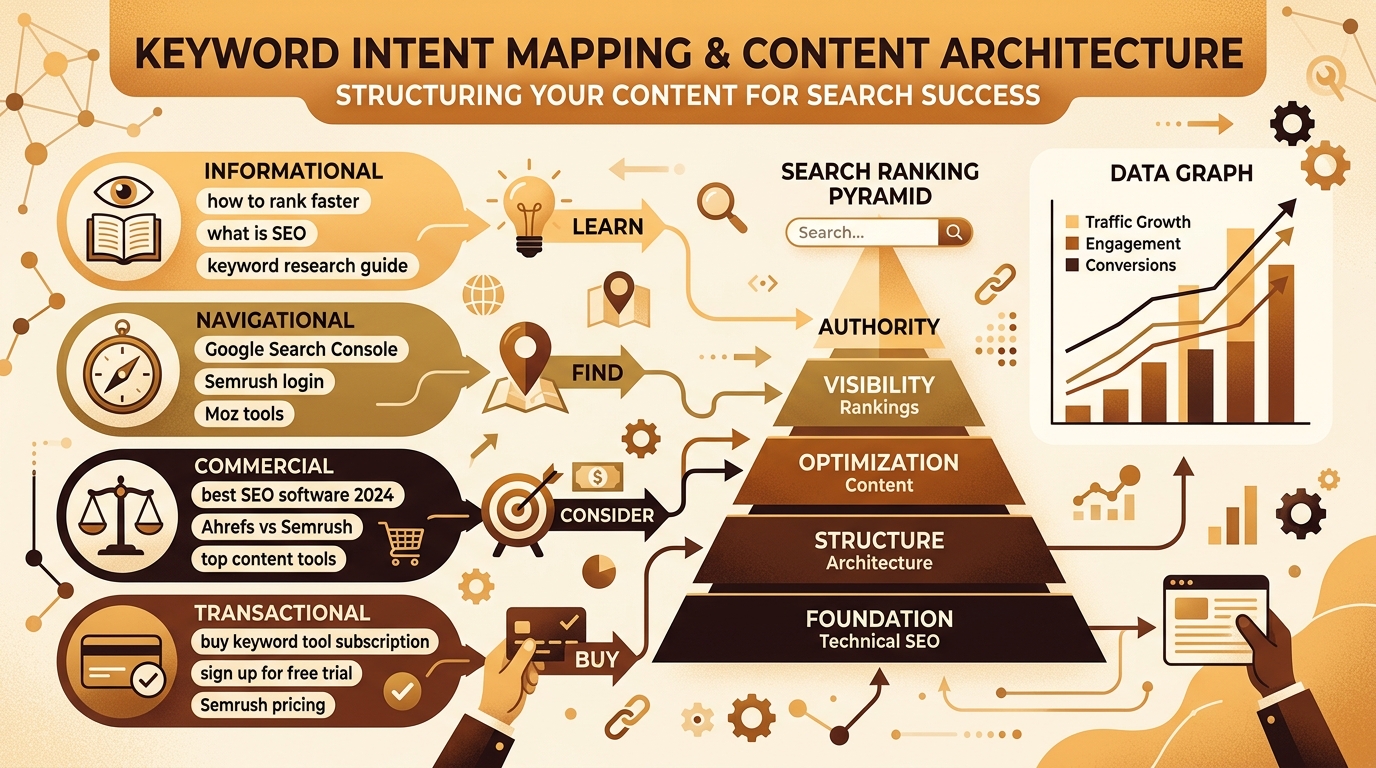
Do not target keywords based solely on search volume. Group target search phrases into four primary intent categories:
- Informational: "What is technical SEO audit" (Addressed via educational guides and blog posts).
- Navigational: "Haridev SD portfolio" (Addressed via brand authority and clean site navigation).
- Commercial Investigation: "Best SEO consultant in Kerala reviews" (Addressed via case studies and comparison pages).
- Transactional: "Hire SEO specialist for audit" (Addressed via optimized service landing pages).
3. E-E-A-T Editorial Depth
Google actively demotes shallow, generic AI summaries. Stand out by incorporating proprietary case studies, verified data metrics, hands-on client examples, and clear author bios establishing genuine industry credentials.
Every new blog post should strategically pass page authority to your core revenue-generating service pages. For example, linking directly to a specialized SEO Services & Audits page signals to search engines that your service page is the authoritative cornerstone of that topic.
Common SEO Mistakes to Avoid
Many companies spend thousands of dollars on digital marketing without seeing results due to fundamental, easily avoidable missteps:
Artificially forcing target keywords into paragraphs degrades readability and triggers algorithmic spam penalties.
With Google's mobile-first indexing, pages that load slowly or break layouts on smartphones are systematically demoted.
Writing a sales pitch when the searcher is seeking an educational step-by-step tutorial leads to high bounce rates.
Incorrect canonical URLs or accidental noindex directives can wipe valuable pages entirely out of Google's search index.
SEO vs. Paid Advertising (PPC): A Strategic Comparison
Deciding where to allocate your digital marketing budget depends on your timeline, financial resources, and business goals. Here is how organic SEO directly compares with pay-per-click advertising:
| Factor | Organic SEO | Paid Advertising (PPC) |
|---|---|---|
| Time to First Results | 3 to 6 Months | Immediate (24 to 48 Hours) |
| Cost Structure | Upfront strategic investment; zero cost per click | Continuous budget required per impression/click |
| Traffic Longevity | Compounding; persists long-term | Ceases immediately when ad spend stops |
| Audience Trust & CTR | High (~70–80% of users click organic results) | Moderate (~20–30% click paid search ads) |
| Scalability Over Time | CAC decreases as rankings broaden | CAC remains flat or rises with ad auction inflation |
| Best Used For | Sustainable authority, lead generation, long-term brand equity | Immediate product launches, seasonal promotions, rapid testing |
Frequently Asked Questions
Explore answers to common questions business leaders ask when evaluating organic search optimization:
Most websites experience initial ranking movements and indexation improvements within 3 to 6 months. Substantial compounding traffic, commercial pipeline growth, and measurable sales usually materialize between months 6 and 12, depending on domain age, current technical health, and keyword competition.
Neither is inherently "better"—they serve distinct tactical purposes. Paid advertising is optimal for immediate lead generation and testing new offerings. However, SEO delivers significantly higher long-term return on investment because the traffic continues flowing even after active spending stops, building an enduring corporate asset.
Absolutely. Local businesses have a significant structural advantage in localized map-pack results and regional searches. By optimizing their Google Business Profile, accumulating verified local customer reviews, and creating regionally relevant content, local brands routinely outrank massive national competitors for high-converting near-me queries.
Modern search engines prioritize total alignment with search intent demonstrated through genuine E-E-A-T (Experience, Expertise, Authoritativeness, and Trustworthiness). If your content answers the user's intent faster, clearer, and more thoroughly than anyone else while sitting on a fast, mobile-friendly codebase, your rankings will climb.
Technical SEO ensures search engine crawlers can efficiently discover, parse, and render your site. If your website has crawl errors, broken canonical tags, slow Core Web Vitals, or missing sitemaps, search engines will struggle to index your content, wasting the effort put into writing high-quality articles.
SEO ROI is calculated using the formula: (Total Revenue from Organic Search - Total Cost of SEO Strategy) / Total Cost of SEO Strategy × 100. By configuring accurate goal completions, pipeline values, and multi-channel attribution in Google Analytics 4, businesses can track the direct revenue return from organic search.
Conclusion & Action Plan
In modern digital commerce, search engines are the ultimate arbiters of credibility and visibility. Investing in strategic search engine optimization is not an administrative expense—it is a long-term capital investment that compounds in value each month.
By establishing a clean technical foundation, targeting commercial search queries that your prospective customers actually type, and consistently delivering authoritative answers, you insulate your company from escalating ad costs and secure predictable organic growth.